
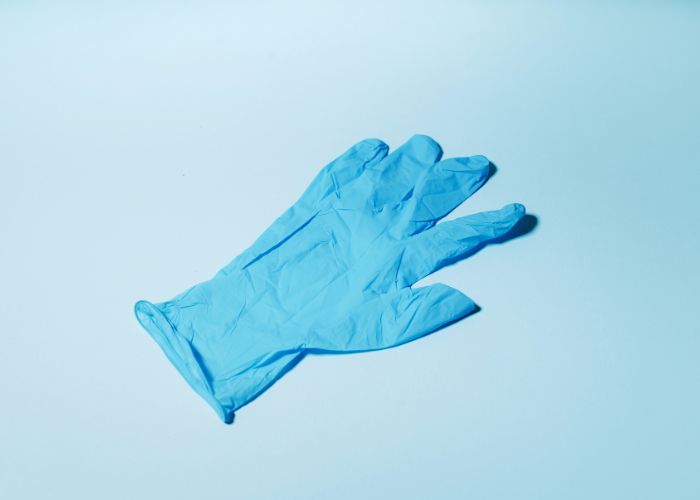
If you’ve ever worked in healthcare, food service, cleaning, or even DIY projects at home, chances are you’ve used nitrile gloves. They’re one of the most popular types of disposable gloves in the world today because they’re strong, flexible, and latex-free (making them safe for people with latex allergies).
But as convenient as they are, a big question comes up: Are nitrile gloves biodegradable? And if not, what does that mean for the environment? Read on:
What Are Nitrile Gloves?
Nitrile gloves are made from a synthetic rubber called nitrile butadiene rubber (NBR). Unlike latex gloves, which come from natural rubber, nitrile is man-made from chemicals like acrylonitrile and butadiene.
Here’s why people love them:
- They’re stronger and more puncture-resistant than latex.
- They stand withstand chemicals, and even certain solvents.
- They’re hypoallergenic because they don’t contain natural rubber proteins.
That’s why you’ll find them in hospitals, restaurants, tattoo parlors, cleaning services, and even in households.
Are Nitrile Gloves Biodegradable?
No, standard nitrile gloves are not biodegradable.
Since they’re made from synthetic rubber, they don’t break down naturally like organic materials. Instead, they can sit in landfills for decades or even over 100 years without fully decomposing.
This is one of the biggest downsides of nitrile gloves. They’re amazing for safety and protection, but once you throw them away, they become part of the world’s growing waste problem.
How Do Nitrile Gloves Impact the Environment?
The environmental footprint of nitrile gloves goes beyond not being biodegradable .
- Landfill Waste
Every year, billions of disposable gloves are thrown away worldwide. Since nitrile gloves don’t decompose, they pile up in landfills and take up space for generations.
- Incineration Pollution
Some facilities burn nitrile gloves as waste disposal. While this reduces volume, it also releases carbon dioxide (CO₂) and other pollutants into the air.
- Microplastic Pollution
Over time, nitrile gloves may break into smaller pieces instead of fully decomposing. These fragments can become microplastics, which contaminate soil and water sources, affecting wildlife and even entering the food chain.
- Energy-Intensive Production
The process of making nitrile gloves involves the use of heavy chemicals and it consumes energy, contributing to greenhouse gas emissions.
So while they’re a necessary tool in many industries, their environmental impact can’t be ignored.
Eco-Friendly Alternatives & Solutions
The good news is that innovation is starting to address this problem. Here are a few eco-conscious options:
- Biodegradable Nitrile Gloves
Some newer nitrile gloves are designed with special additive that help them break down faster in landfills, sometimes in as little as 5 years instead of 100.
- Latex Gloves
Since latex comes from natural rubber, it’s more biodegradable than nitrile. The downside is that latex allergies make them unsuitable for some users.
- Compostable and Plant-based Gloves
Still in early stages, but some companies are experimenting with gloves made from plant-based materials. These don’t yet offer the same strength as nitrile but are a promising development.
- Recycling Programs
Specialized programs collect and recycle used nitrile gloves, turning them into products like flooring or park benches. While they’re not widely available yet, they’re a step in the right direction.
Practical Tips for Reducing Glove Waste
If you use nitrile gloves regularly, here’s what you can do to minimize the environmental impact:
- Don’t overuse: Only wear gloves when they’re truly necessary. Sometimes, washing your hands well after use works just as well.
- Choose biodegradable brands: If available, switch to eco-friendly nitrile gloves.
- Buy in bulk: Cuts down on packaging waste.
- Dispose properly: Never toss gloves in nature or waterways. If recycling isn’t available, put them in general waste.
- Educate others: Whether you run a business or just use them at home, share tips on proper glove use and disposal.
Conclusion
So, are nitrile gloves biodegradable? Unfortunately, no standard nitrile gloves can take decades (or centuries) to break down, making them a burden on the environment. However, eco-friendly alternatives like biodegradable nitrile gloves and recycling programs are emerging to reduce their impact.
Using them responsibly is important, only when needed, disposing of them properly and supporting greener innovations. That way, we can balance safely and sustainability.
Frequently Asked Questions
- How long do nitrile gloves take to decompose?
Standard nitrile gloves can take over 100 years to break down in landfills because they’re made from synthetic rubber.
- Are there biodegradable nitrile gloves available?
Yes. Some manufacturers now produce biodegradable nitrile gloves that decompose much faster within 5 to 10 years thanks to special additives.
- Can nitrile gloves be recycled?
Not in regular curbside recycling bins. However, specialized recycling programs exist that collect and repurpose them into new materials.
- Which disposable gloves are the most eco-friendly?
Latex gloves are more biodegradable because they come from natural rubber, but they’re not suitable for people with latex allergies. Some compostable gloves are being developed, though they’re not as durable as nitrile yet.
- What’s the best way to dispose of nitrile gloves?
If no recycling program is available, dispose of them in general waste. Never leave them in the environment, as they can harm wildlife and ecosystems.